Activities
3
min read
IR Insight Webinar: The New Normal of Work and Opportunities to Restructure Work Relationships Due to Covid-19
Writer
Elsa Devita
Published on
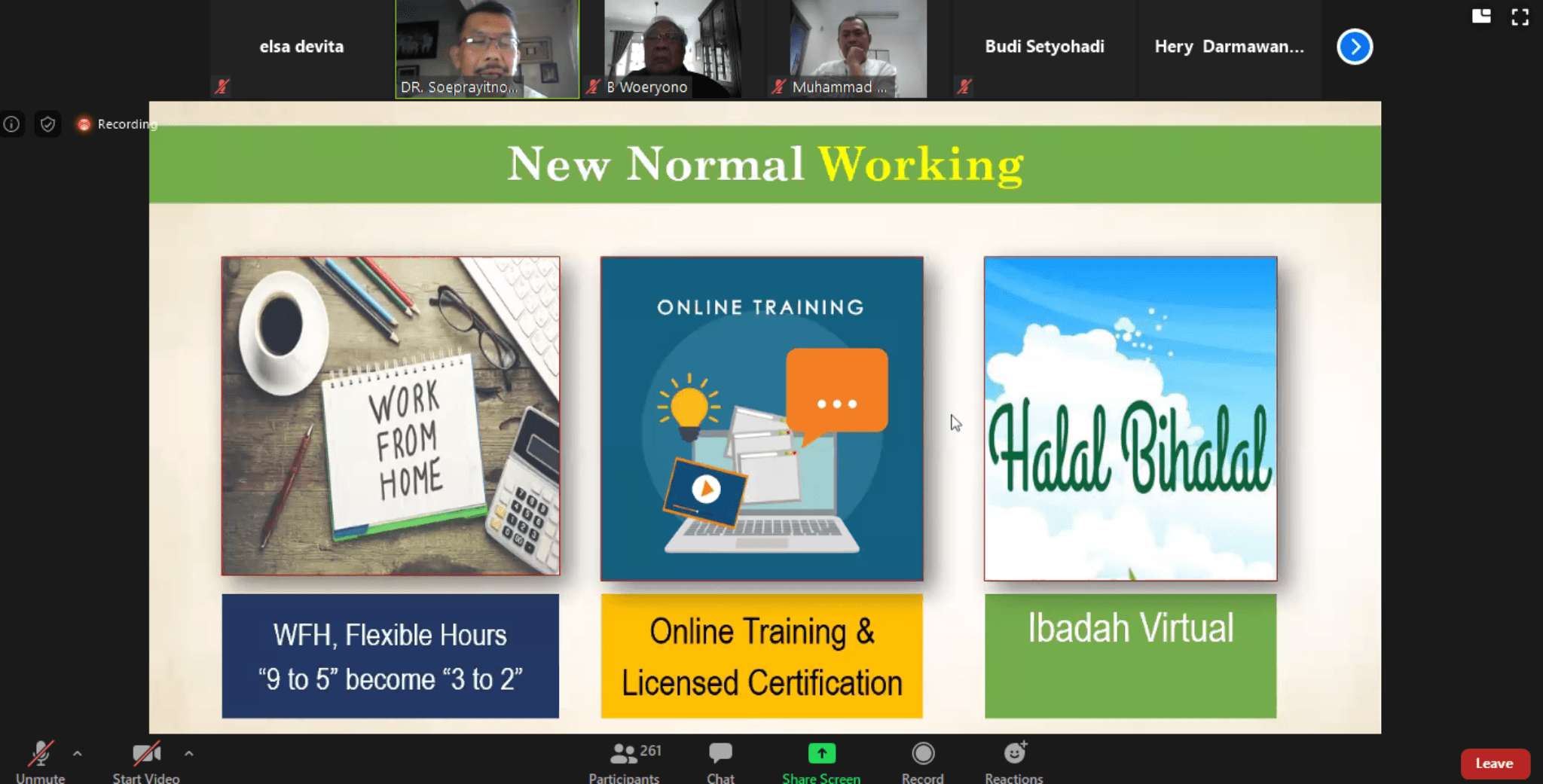
On May 16, 2020, the Never Okay Project participated in a webinar organized by the Apindo Training Center entitled "New Normal Working and Opportunities to Reshape Work Relations Due to Covid-19." The webinar took place from 09:30 AM – 11:30 AM to discuss the life and conditions of workers from various aspects, namely legal and social aspects. The webinar, moderated by Dr. Soeprayitno, Chairman of the APINDO Provincial Leadership Council of DKI Jakarta, was attended by speakers including M. Syahril Mansyur (Director of RSPI SS), Ahmad Ansyori (National Social Security Council), and M. Aditya Warman (Representative of BPJAMSOSTEK).
As an opener, Dr. Soeprayitno presented materials related to new normal working and new normal lifestyle. COVID-19 has forced humans to adapt to technological developments so that everything becomes faster and more instant. New normal working has also evolved, such as work hours shifting to be quicker, as well as opportunities and access for self-development that can be achieved from home. This leads to a new normal lifestyle like developing DIY (Do it Yourself), Physical Distancing, an increased need for frozen food, and enhancing solidarity activities from home. This new way of life raises questions about job positions that are threatened and enduring, as well as how we should respond to it?
An interesting point was also raised by Ahmad Ansyori regarding New Normal Working and Opportunities to Reshape Work Relations Due to Covid-19, while also answering the questions raised by Dr. Soeprayitno. The workforce structure in Indonesia reaches 129.36 million workers, with a distribution of 42.73% working in the formal sector and 57.27% in the informal sector. The presence of Covid-19 threatens various sectors, especially those working in the informal sector with cases of mass layoffs and rising suicides. With incidents like this, work relations become an element that must be taken into account, of course, to maintain the welfare of workers. Changes in work relations have also become negotiable, such as wages, working conditions, and working hours. Therefore, work relations during the pandemic must be managed well to prevent deterioration after the pandemic ends. For example: Employees working in malls may have their contracts changed to work from home under the condition that they must disseminate information about the store's products widely.
The Covid-19 pandemic also emphasizes a new approach in terms of wages. Muhammad Aditya Warman, as a member of the supervisory board at BPJS Ketenagakerjaan, explained the relaxation of BPJAMSOSTEK contributions. The ideal system in wage determination should be simple, affordable, legal, and fair. These four values must not be lost during the current period of new normal working. At this time, wages have become competitive, where increasing productivity is the added value. This means that new normal working requires stable wages to continue to function well. For instance, labor now prefers "keeping a job" rather than "steady work," so overly strict worker protection can cause companies to be trapped between declining productivity during this pandemic and obligations towards workers, making the New Normal potentially fail. Workers must be upgraded (upskilled) through certification processes. However, wage increases must reflect the competencies obtained from certification, not merely the certificates themselves.