Activities
4
min read
TURC ZOOM – Release of Survey Results on Worker Conditions and Lives of Workers Amid the COVID-19 Pandemic
Writer
Claudy
Published on
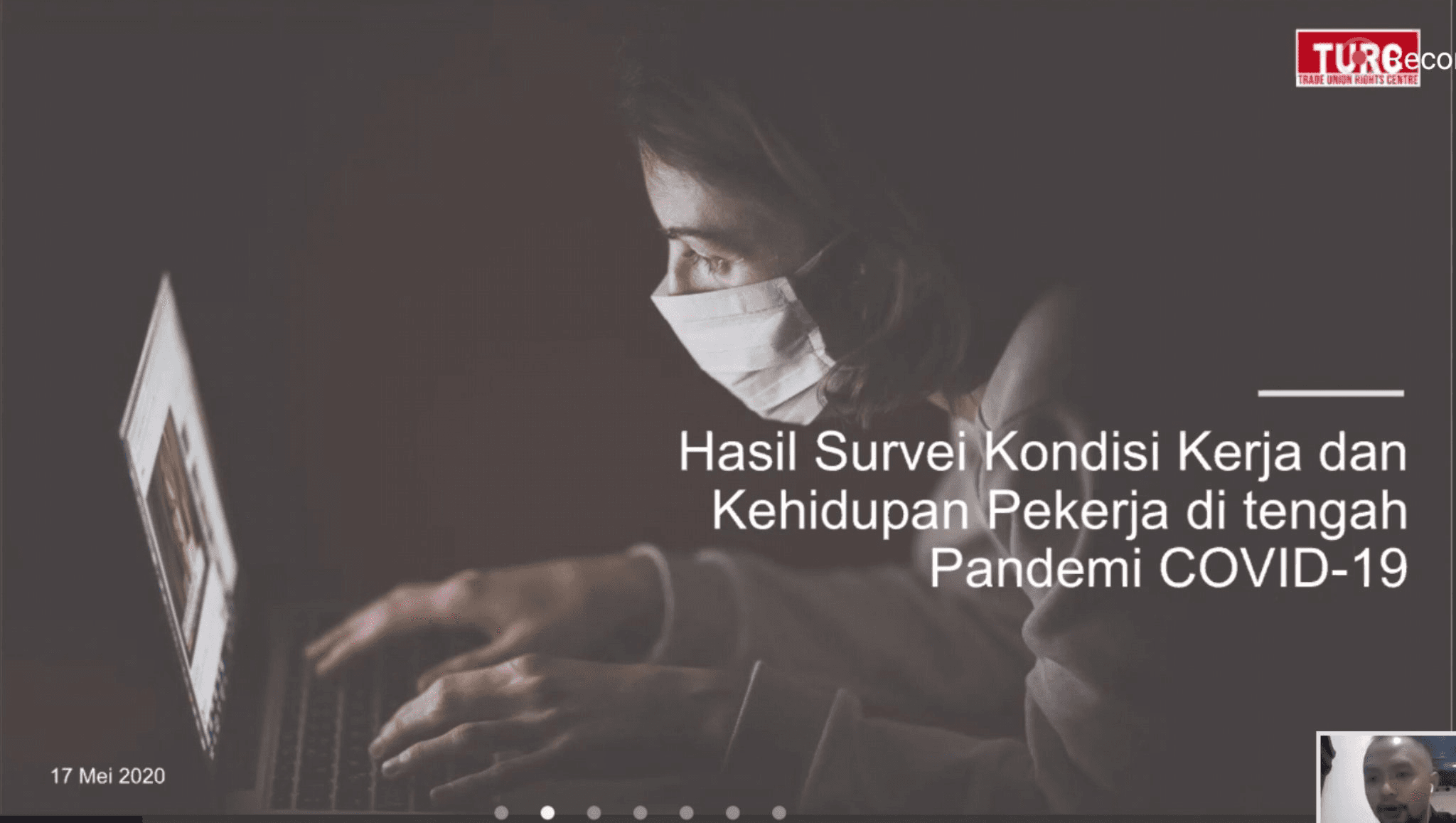
On May 17, 2020, the Never Okay Project participated in a Media Briefing: Release of Survey Results on Worker Conditions and Lives of Workers during the COVID-19 Pandemic. As we know, this COVID-19 pandemic has changed many things in the employment sector. This event presented the survey results that had been conducted by the Trade Union Rights Centre online to see the conditions and lives of workers during the COVID-19 pandemic. The Trade Union Rights Centre (TURC) is an NGO that serves as a study and labor advocacy center to support the role of labor unions in advocating for workers' rights and welfare for workers and their families.
The survey took place from May 1 to May 11, 2020, with 655 respondents from the formal sector spread across 24 provinces. The survey aimed to provide an overview of the variation in the impact of the pandemic during COVID-19, due to gaps in the data sources obtained and presented by the government regarding the pandemic's impact on workers. There are three main aspects in this survey, namely working conditions during COVID-19, workers' responses to the pre-employment card policy, and workers' responses to the Ministry of Manpower's policy regarding THR.
Working Conditions
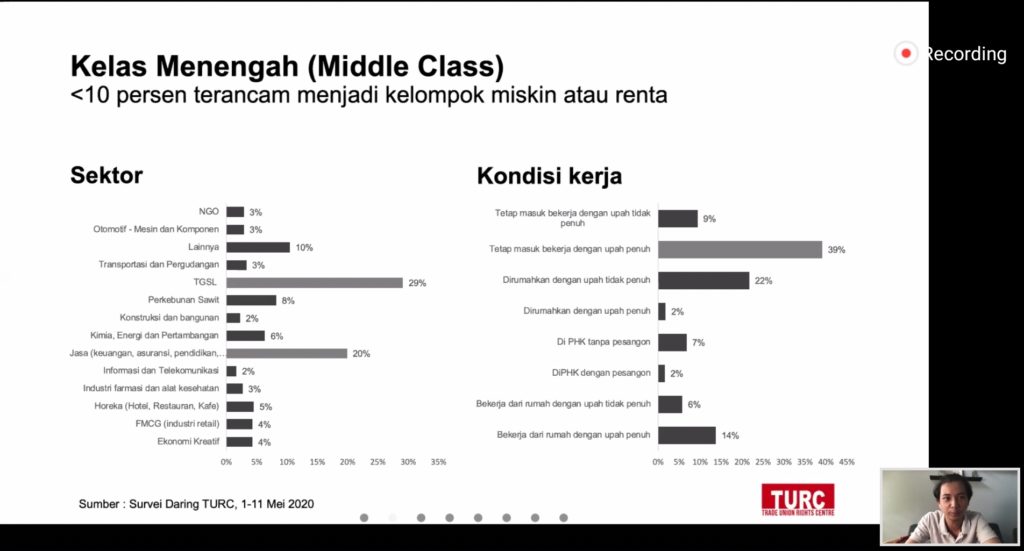
Anang F Sidik as the data academy staff at TURC presented the survey findings, which demographic regions are spread throughout Indonesia, with the majority in West Java, DKI Jakarta, and Central Java regarding working conditions during the COVID-19 pandemic, namely, 68% of companies temporarily closed activities during COVID-19, while the largest percentage of respondents continued to work with full wages (38%) and were laid off with incomplete wages (21%). Then the impact of layoffs in the TGSL sector (Textiles, Garments, Footwear, and Footwear) is significantly noticeable at 32% without severance pay and 40% with severance pay compared to other industrial sectors. Meanwhile, those affected by work from home (WFH) with incomplete wages are highest in the Information and Telecommunication sector (50%). Other interesting findings from working conditions during the COVID-19 pandemic are that aspiring middle class (>10%) are threatened to become poor and >10% become vulnerable (vulnerable).
2. Social Protection Guarantees (Pre-employment Card, Old Age Security (JHT), and THR
a. Pre-employment Card
As we know, the worker card is an effort by the government to provide assistance to workers affected by the COVID-19 pandemic. However, based on the survey results, it was found that the majority of respondents felt that this program did not meet their needs. This is evidenced by the number of 42% of respondents unaware of this program, 58% knew about it but not all had an understanding of the benefits of the pre-employment card. Moreover, the socialization of the pre-employment program carried out by the government is considered ineffective, also the convoluted procedures make workers less understand and hesitant to register for the pre-employment program, even having no interest in registering.
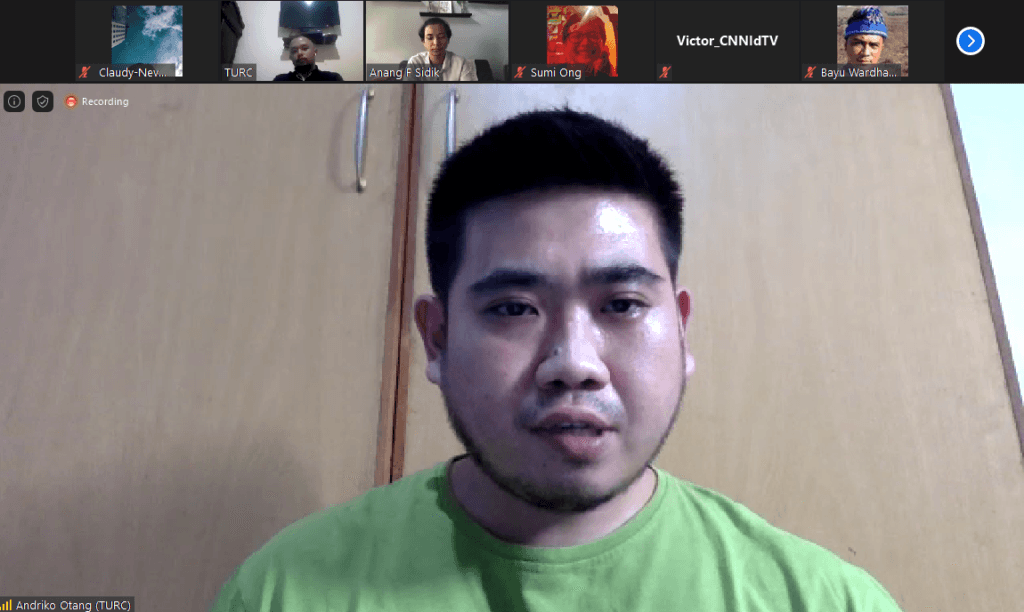
Andriko Otang as the chairman of the Trade Union Rights Centre explained the need to reevaluate the pre-employment card program being implemented. The program material is considered to generalize that layoff victims have high education levels. For example, workers with a majority of high school and junior high school education are deemed unsuitable for the training material. Therefore, the Trade Union Rights Centre suggests that the government truly pay attention to the workers' needs assessment, especially in the dimensions of upskilling and reskilling. Otang (2020) suggests that the government should postpone the pre-employment card program while redesigning the program, which tends to be applied too broadly online, and the budget can be allocated to unconditional social assistance from the government.
Suggestions from respondents to the government in facing the impacts of COVID-19 are to directly provide unconditional assistance or funds allocated for social assistance.
b. Holiday Allowance and Old Age Security
In addition to the pre-employment card issue, the majority of respondents agree if the government allows the disbursement of Old Age Security (JHT) for workers who are laid off to meet their living needs. It was also expressed that respondents disagreed if THR payments were made in installments by the companies because THR is considered a fixed cost that companies have planned for each year. However, some respondents who agreed that THR could be paid in installments, but within a period of no more than 3 months. Based on TURC's analysis, it is considered that the respondents' perception who agree with THR payments in installments has acknowledged the condition of companies affected by the COVID-19 pandemic. In addition, TURC sees a gap in the Ministry of Manpower's letter which allows THR to be paid in installments under applicable conditions for companies. However, in the field, TURC finds cases where the government has a lack of role in monitoring the procedures carried out by companies for installment payments of THR in accordance with the existing regulations.
In conclusion, it is hoped that the results of this survey can serve as recommendations for the government in creating regulations so that data on companies receiving incentives is publicly disclosed, policy brief to the government and related stakeholders so that hopefully every rupiah spent from the state budget (APBN) has benefits for the well-being of society and the national economy, especially in the midst of the COVID-19 pandemic.