Activities
6
min read
Consolidation of 16HAKTP National Commission on Violence Against Women
Writer
Kevin
Published on
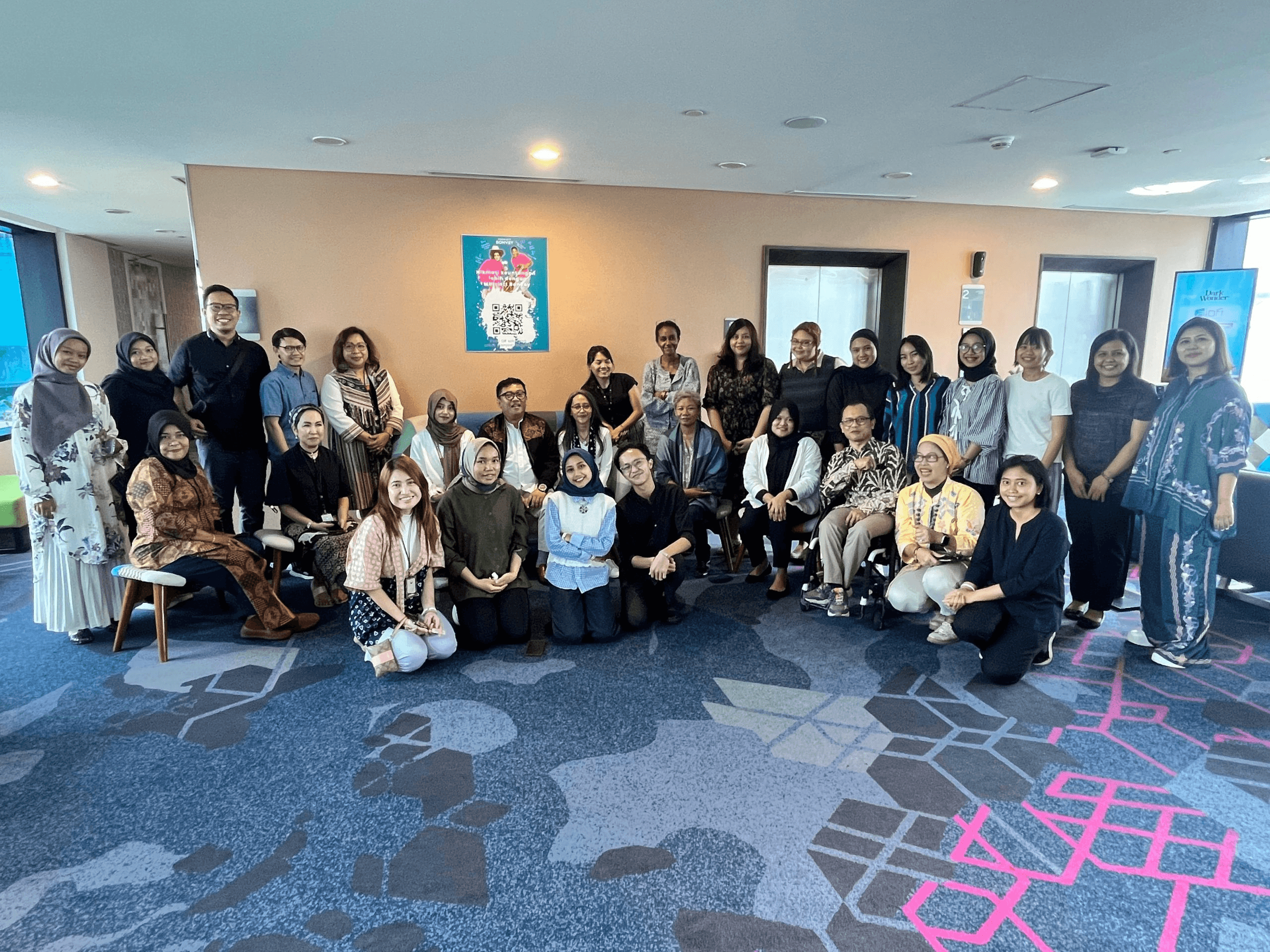
Veryanto Sitohang, Chair of the Subcom Parmar Komnas Perempuan stated that the 16HAKTP campaign in 2022 and 2023 focuses on educating the public about the new TPKS Law that has been enacted. So far, out of the 7 derivative regulations of the TPKS Law promised by the government, only 3 have been enacted. Komnas Perempuan is conducting an online campaign almost every day. Offline campaigns are carried out in Lombok, Jember, Garut, Serang, and Solo.
Activities undertaken by Komnas Perempuan:
Meetings with civil society to discuss support services for women victims of violence.
Dialogues with regional leaders (District Heads, Mayors, Governors) to consolidate programs and assess what programs have been implemented in the region. What is needed and can be assisted by Komnas Perempuan (for funding, it is not provided by Komnas Perempuan).
Meetings with the Police (District Police Chief, Provincial Police).
Media Gathering, because the media in the regions often lack a good gender perspective. They tend to be more vulgar and focus on the identity of the victim or the chronology of the violence incident.
Then, internal evaluation at Komnas Perempuan to formulate campaign strategies. There are 15 commissioners with their own areas of expertise.
Focus:
Culpabilization of victims.
In the private sphere, domestic violence. PKDRT policies are still used for victim re-victimization.
In the public sphere, KBGO, which has a very high occurrence rate.
Health Guarantees for Women Victims of Violence
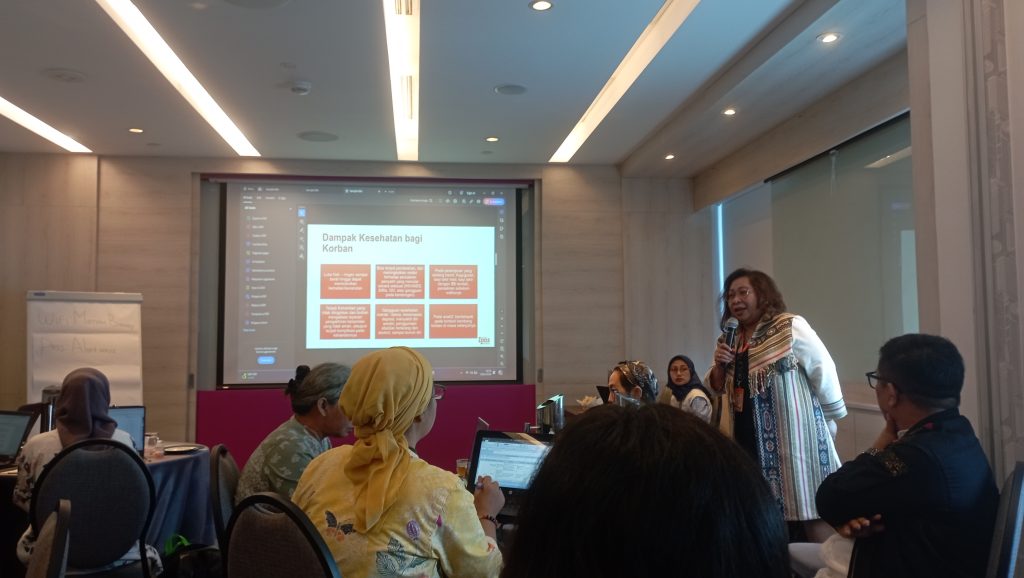
The comparative advantage of IPAS, presented by Marcia Soumokil, Director of IPAS Indonesia, focuses on health care for both victims of violence and survivors of sexual violence. So far, the Ministry of Health has provided Guidelines for Handling KtP/A (Women & Children), due to the very limited time frame in which victims must report and access health services (emergency contraception < 3-5 days and not for abortion; Post-exposure Prophylaxis (PEP) < 72 hours for HIV prevention; Hepatitis B Vaccination; Pregnancy Test), and what IPAS is currently working on with the Ministry of Health: guidelines for safe termination of pregnancy/abortion.
For health care handling in Indonesia, physical violence should be resolved at the Community Health Center (Puskesmas). If more complex, it can be referred. However, for sexual violence, the team that can resolve it is at the Regional Public Hospital (RSUD). But not all areas can provide health guarantees (not covered by BPJS).
For mental health, the number of cases has been increasing every year, but access remains limited as services are not available at all community health centers. Many survivors have completed their legal cases, but the psychological impacts persist. What is being pursued is to ensure that long-term trauma is also accounted for in handling, and that BPJS can cover payments for it.
So far, there has been underreporting because when survivors come to report, they are only recorded based on their physical condition (recorded as illness only, not as victims of violence). This causes the data to be underreported to see how many cases of violence exist, the magnitude of the impact, and how much funding needs to be allocated for cases of violence against women and children.
The point is, how survivors can receive their rights to treatment, especially for financing to access health services with timely access.
Meanwhile, at UNFPA, Corry stated that they are collaborating with BAPPENAS to prepare a policy brief so that the calculations are like BPJS, seeing what has been funded and what hasn't. Data from Community Health Centers is not synchronized with Simfoni (PPA), so it is not integrated into national data. General hospitals are equipped with PEP kits for handling sexual violence. Emergency contraception still needs to be self-funded by survivors. Contraception covered by BKKBN is only for married couples of childbearing age.
DISCUSSION & REFLECTION SESSION
What issues of violence against women have been prevalent over the past year?
Cak Fuh: Medical examinations remain a barrier for victims.
UNFPA: Community of Practice UNFPA, developing guidelines for content creators for KBGO mitigation. Ages 15-21 are very vulnerable to KBGO.
AwasKBGO: More than 100 KBGO complaints in the last week. With the increasing number of social media platforms, more young people are becoming victims, while adolescents themselves are often not aware of their boundaries in the digital world. One of the main concerns is related to posting pictures that become tools to threaten survivors, especially the youth (NCII).
Mba Evie: Often, teachers or parents also do not know what to do when there is a teenager who becomes a victim.
JakartaFeminist: Femicide, last year there were 190 cases of femicide, mostly perpetrated by partners.
What have communities and individuals done in the 16HAKTP campaign in the past two years?
Improvements for the 2023 16HAKTP campaign:
Educate content creators (stand-up comedians, influencers, etc.) to ensure that the content produced does not contain sexist elements or victim-blaming.
Content moderation, collaborating with platforms to enhance the prevention of violence through digital media.
Input on overlooked issues/still to be emphasized:
Threats against support for victims of violence.
Outside the online context, the intersection of violence with indigenous issues is still very inaccessible.
The PPRT Bill.
Sexual violence in media, on film sets, etc.
Brainstorming Results
Discussing informal workers is very broad as it covers many sectors. Among others, MSME workers, entrepreneurs, culinary entrepreneurs, PPRT; partner workers, freelancers, daily workers, porters; Entertainment, content creators, live streaming hosts.
But as suggested by Mrs. Tias, informal workers should not be grouped by sector to avoid discrimination and not prioritize certain types of informal work sectors. For instance, owners of MSMEs are business actors. Beneath them are still workers in the domestic realm.
Input also from Mrs. Tias, the new standard term used for the theme is “Protection” without an r. Additionally, the term “Recognition” is also good to emphasize that informal workers must also be recognized as workers.
The first issue is the lack of institutions that oversee and no policy framework that protects. The rising trend of informal sector employment is not supported by legal standing. Minister of Manpower Decree 88 of 2023, a derivative of the TPKS Law, is comprehensive enough. It includes:
Companies must establish company policies,
Education in orientation programs, and
Establish Task Forces.
However, policies from the Ministry of Manpower are still rigid in the formal sector, and their implementation is still very minimal, primarily limited to multinational companies and in major cities.
Therefore, not all industries or companies have rigid policies regarding handling and assistance for victims of violence in the workplace. Survivors who experience violence while working are often confused about where to report. The ratification of ILO Convention 190 is still awaited in order to provide a protective umbrella for informal workers.
The second issue is the lack of education among various stakeholders about the rights of informal workers. Informal workers have minimal rights, and employers often deliberately hide information about the rights they should receive. As a result, freelance workers are vulnerable to experiencing violence, whether sexual, psychological, or economic, with no umbrella organization. Even informal workers themselves often do not recognize their rights as laborers. There needs to be an increase in awareness among employers, law enforcement, society, and the informal workers themselves.
The Major Theme of 16HAKTP 2024:
Protect everyone, fulfill the rights of victims, end violence against women
Hashtags:
#TogetherWeMove #FulfillVictimsRights #EndNow