Research
Violence and harassment in the workplace, including gender-based violence, is a serious issue. The presence of violence and harassment can have adverse effects on the business world, companies, and workers, affecting relationships in the workplace, the health and well-being of workers, company productivity, and the reputation of the company.
One of the challenges in efforts to end violence and harassment in the workplace in Indonesia is the lack of public awareness regarding this issue, including the ability to identify forms of violence and harassment, as well as how to respond to them. Often likened to an iceberg phenomenon, many victims of violence and harassment in the workplace are reluctant to report their cases.
In June 2019, the International Labor Conference in Geneva, representing elements of government, employers, and trade unions from its member countries; adopted ILO Convention No. 190 (C190) on the Elimination of Violence and Harassment in the World of Work. This is the first international agreement that recognizes everyone's right to a world of work free from violence and harassment, including gender-based violence and harassment.
C190 is an important instrument developed by the world of work (representatives of the government, employers, and workers), and establishes a clear and common framework for preventing and addressing violence and harassment, based on an inclusive, integrated, and gender-responsive approach.
The limited information on data, research, and case analysis reports in Indonesia discussing violence and harassment in the workplace in Indonesia (especially forms of violence and harassment other than sexual violence and harassment) is also one of the obstacles. However, the availability of relevant data is crucial to remind us of the urgency of this issue, including serving as a basis for the formulation of prevention and case handling programs.
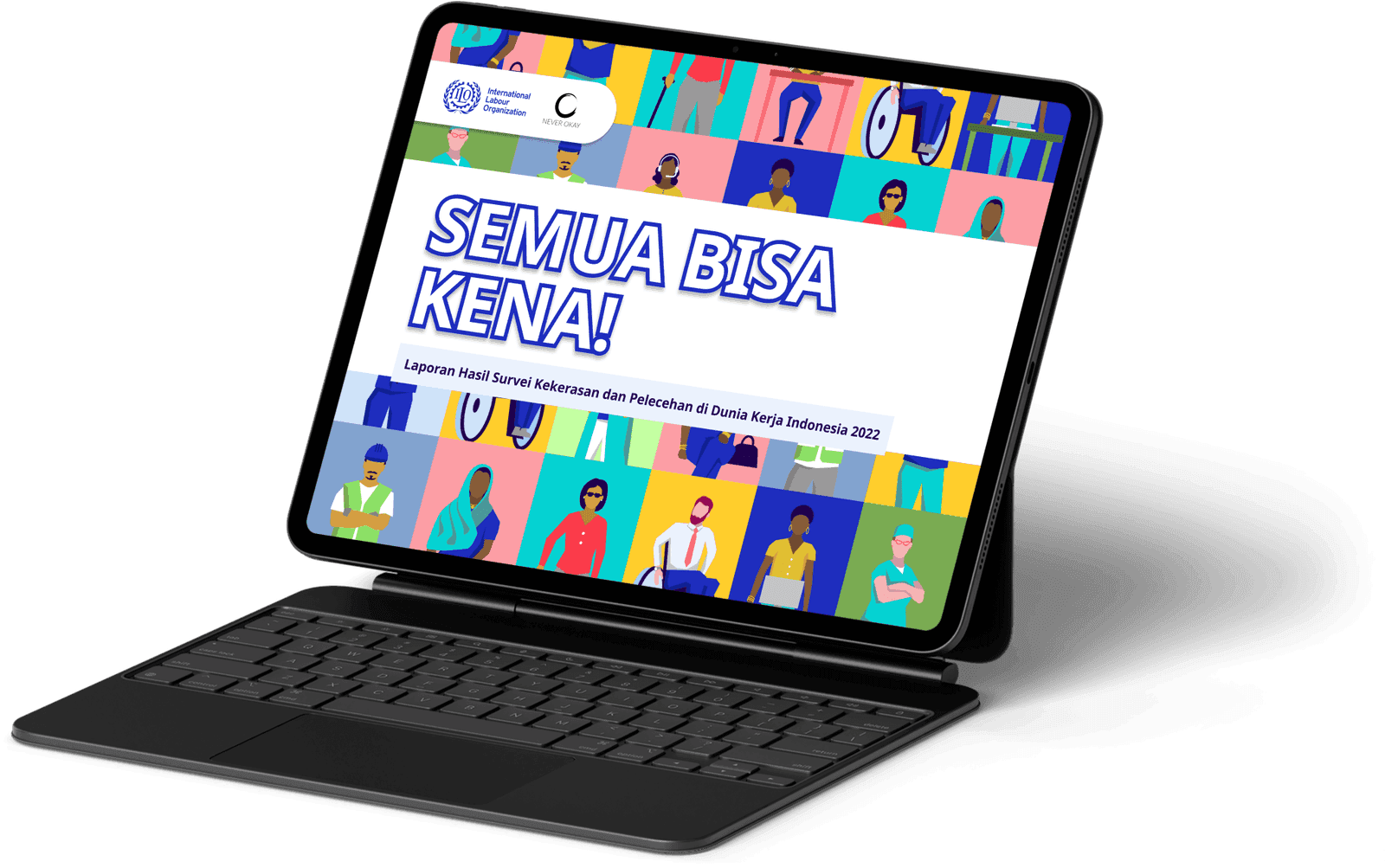
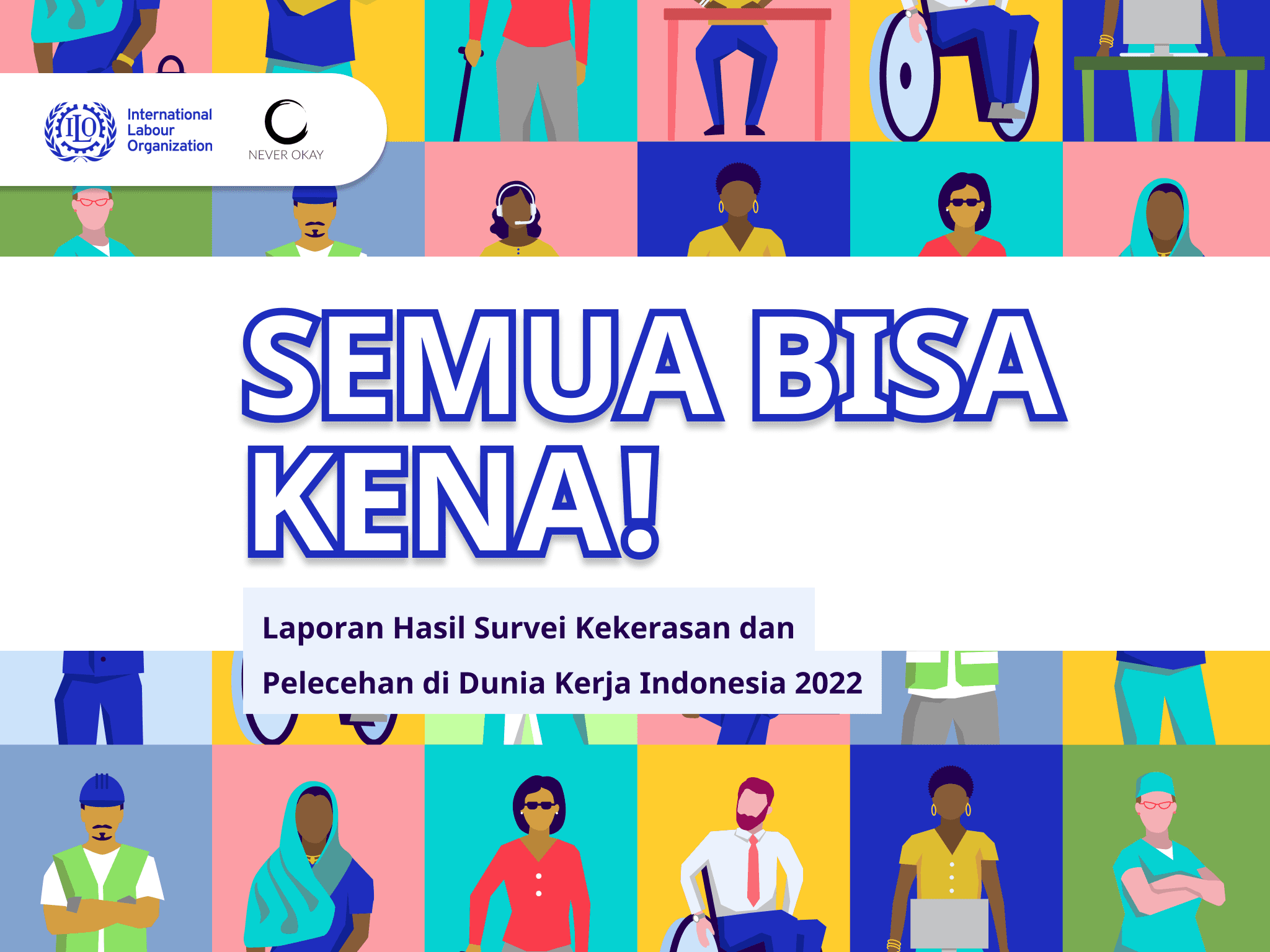
Through the 2022 Indonesia Violence and Harassment Survey in the World of Work, the ILO Jakarta Office and the Never Okay Project attempt to map workers' experiences in Indonesia related to violence and harassment in the workplace, both as victims and witnesses over the past two years (2020-2022). In addition to filling data gaps, this survey report also provides an opportunity to raise awareness of the roles and involvement of various parties and stakeholders. In this regard, the ratification of ILO Convention 190 on the “Elimination of Violence and Harassment in the World of Work” can support the Law on Sexual Violence Crime No. 12/2002 and demonstrate a more serious commitment to providing protection to Indonesian workers from violence and harassment in the workplace.
Writer
Imelda Riris Damayanti, Fildza Aisyantifa Kautsar, Alvin Nicola, Fiana Dwiyanti
Published on