Research
The Pandemic of Violence and Sexual Harassment in the Workplace: An ‘Endgame’?
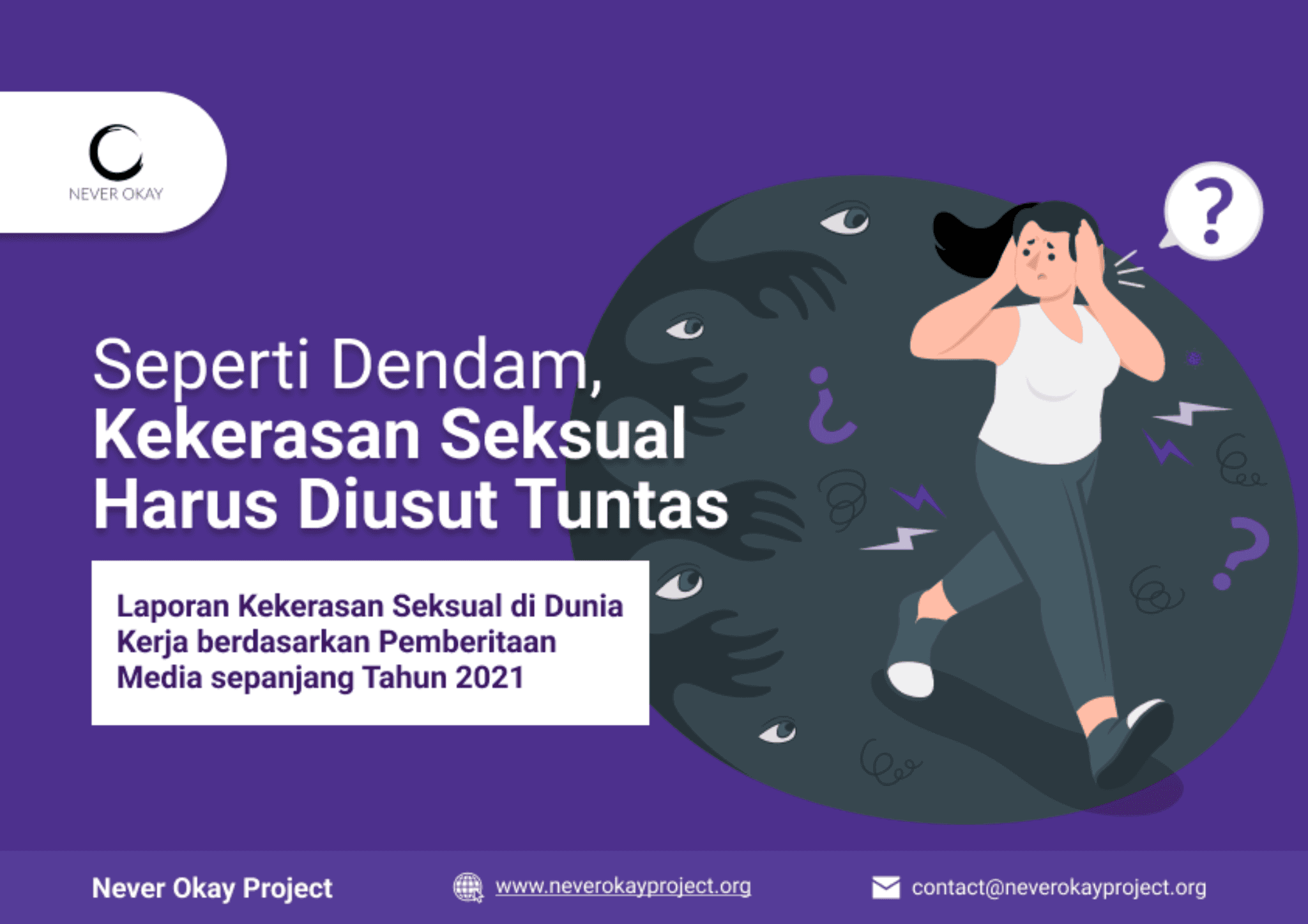
The Never Okay Project (NOP) is pleased to welcome the release of the monitoring report on cases of violence and sexual harassment in the workplace during the year 2021. Unfortunately, this joy is also overshadowed by deep sorrow due to the unbroken cycle of violence, especially as it becomes more frightening amidst the threat of Covid-19.
It can almost be assured that there has been no progressive development from the State's commitment to promoting a decent protection ecosystem for workers, especially for vulnerable groups. The draft law on Sexual Violence Crimes that continues to fail to be passed actually reflects clear evidence of crimes due to neglect (crime by omission). This means that the State consciously continues to allow the fall of victims of sexual harassment, including those in employment relationships.
Another form of neglect that is portrayed in this report is the State's reluctance to ratify ILO Convention No. 190 concerning Violence and Sexual Harassment in the Workplace. Until now, Indonesia has not shown signs of following the green light from the 11 countries that have previously made their commitments—at least not in the near future under the current labor regime.
The current law enforcement instruments are also more focused on narrating restorative justice, which seems to serve the predatory sexual offenders as the actual victims. Almost the majority of the cases analyzed indicate that justice seekers who dare to report to law enforcement are forced to swallow the bitter pill of revictimization, even threats of defamation due to the draconian law ITE Law.
At the same time, this trend of formal ‘silencing’ is countered with collective actions to voice the empirical experiences of victims in contemporary media spaces, primarily social media. Several viral cases that have attracted significant public attention and even law enforcement often receive responses. Unfortunately, the effects of this viral policy are not sufficient to open the door to real justice because the criminal justice system ultimately shuts that door.
In the end, amidst the narrowing spaces for legal reform, worker activism becomes central. Strengthening labor union networks, especially mass media, is needed to fill the above gap. Therefore, this report is expected to add to and even strengthen the discourse on labor collectivity for labor union colleagues and media networks so that the struggle for justice does not end with endgame.
Writer
Imelda Riris Damayanti, Fildza Aisyantifa Kautsar, Amru Aginta Sebayang, Sasmithaningtyas Prihasti Laraswari
Published on