Photo Journey
2
min read
Syaldi Sahude
Writer
NEVEROKAY
Published on
“Men should be aware and willing to learn”
April 30, 1 day until Labor Day.
Gender relations have until now been one of the main causes of women being more vulnerable to sexual harassment, including sexual harassment in the workplace. The Never Okay Project team met Syaldi Sahude, the founder of the New Men Alliance known for his efforts to support the women's movement for equality and justice. Syaldi then shared about his journey fighting against the patriarchal values he once adhered to until he began collaborating with ALB through campaigns often targeting men.

Realizing that in cases of gender-based harassment and violence, men often become the perpetrators or part of the silent majority, Syaldi believes that the effort to educate men is as important as empowering women.
Syaldi acknowledges the reality that women are always tightly linked to domestic roles, which becomes one of the obstacles in pursuing careers. Even in legislation, there is an emphasis on women's position as housewives. Working women are usually only considered to assist men’s roles. “Many women ultimately have to sacrifice their careers for the household”. In some job assignments, female workers are often not the first choice because they are considered to have difficulty balancing careers and domestic responsibilities.
The women’s movement, which is now increasingly vocal, shows progress in empowering women, including in efforts to eliminate sexual harassment in the workplace. The normalization of forms of harassment, such as calling “dear”, touching, and flirting can be countered with education for men. “Men must be aware and willing to learn” he emphasized.
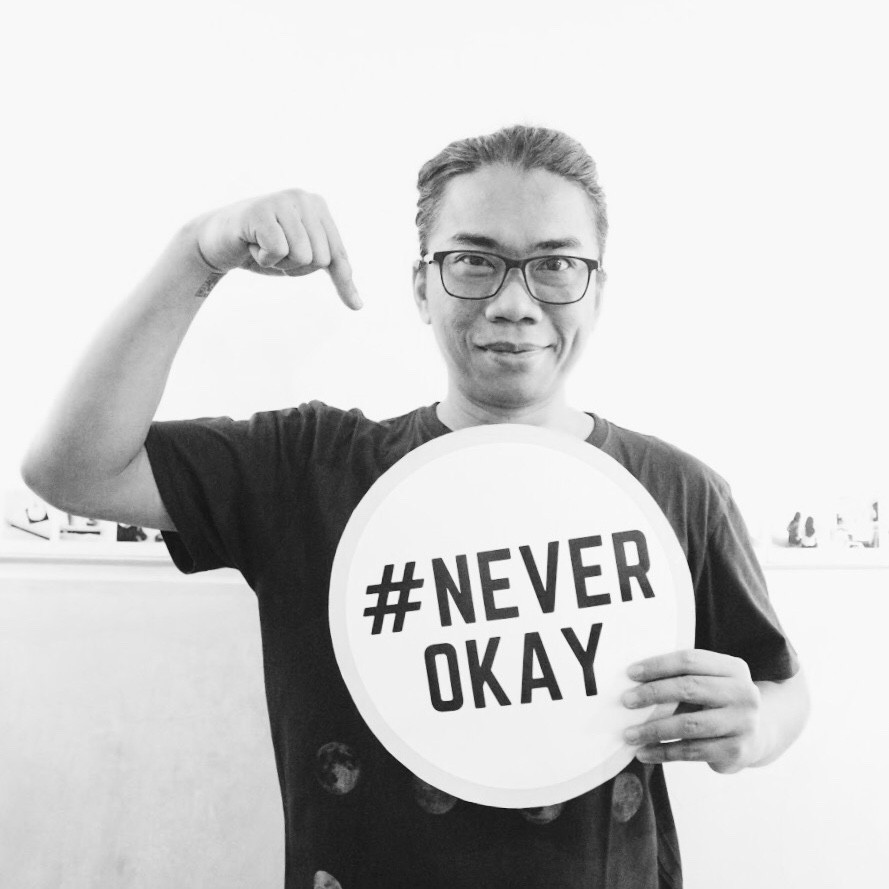
According to Syaldi, as a man, the first step that needs to be taken is to acknowledge the erroneous values believed, especially if one has ever been a perpetrator. After that, a commitment from men is needed not to commit harassment and sexual violence.
In addition to educating men, Syaldi stresses the importance of mechanisms and policies regarding sexual harassment in companies. “Many companies view sexual harassment that occurs as a shame that must be covered up,” he explained. In fact, having well-implemented policies not only protects and fulfills workers’ rights but can also create a good image for the company. The hope is that the workplace can become a safe and comfortable place for everyone.
Other articles

Article
3
min read
Being Competent vs Being Liked. Why are female leaders always forced to choose?
"She's too emotional."
"She's too nice to lead."
Comments like these might sound simple. However, behind them lies a double standard that still affects how we view leadership in the workplace. In various organizations, female leaders are still faced with conflicting expectations. When women are firm and assertive, they risk being labeled bossy or emotional. But when women show empathy and warmth, their competence is questioned instead.
In Enemies with Benefits, the character Wine, who is newly appointed as a Supervisor, is immediately labeled "just a pretty face" due to her friendliness at work. To gain respect from her team, Wine feels she must change her demeanor and suppress her personality to appear more "worthy" of being a leader.
Wine's experience reflects a phenomenon known as the likability-competence trap.
A bias that often forces women to choose between being respected for their competence or liked for their personality. This double standard means that a female leader's competence is judged not only by her work results, but also by the way she speaks, expresses emotions, and builds relationships.
“women who lead are disliked, and women who are liked don’t lead.”
This kind of bias rarely presents itself in the form of overt discrimination. Instead, it arises through everyday comments, feedback, performance reviews, and promotion processes that appear objective, yet are still influenced by unconscious gender stereotypes (unconscious bias).
Consequently, a woman's leadership is often judged not just by things that objectively support work success, such as the quality of decisions, work results, or the impact created. Instead, assessments are also influenced by the extent to which a female leader is considered "friendly" enough, "assertive," "pleasant," or aligned with gender expectations that still linger in the workplace.
For organizations, the impact is not only felt by individuals. Bias in evaluating leadership can limit the diversity of leadership styles, hinder creativity and human resource development, and make decision-making processes less fair.

Image: A scene of Wine crying upon hearing gossip from her coworkers about her.
Building an inclusive workplace is not just about opening up more opportunities for women or vulnerable groups to lead. What is equally important is ensuring that every process of evaluation, promotion, and feedback is conducted with fair standards. Inclusive leadership begins when competence becomes the basis of evaluation, not stereotypes about how a leader "should" behave.
Focus on competence.
Focus on work results, objective KPIs, leadership quality, and impact, rather than whether someone seems “friendly enough” or “assertive enough” in their interactions.
Distinguish leadership style from leadership ability.
Not all leaders have to show the same style to be effective. Diverse leadership styles can support the growth of creativity in the work culture and in decision-making. Support women to lead authentically.
Review the language in performance reviews.
Avoid feedback that focuses on someone's personality or expression, such as being "too emotional", "lacking warmth", or "lacking authority". Provide specific, work-behavior-based, and actionable feedback.
Be aware of bias before making decisions.
Reflect on whether evaluations, promotions, or feedback are truly based on performance, unaffected by unconscious gender stereotypes (unconscious bias).
Because in the end, competence has no gender.
An equal workplace is a place where everyone can lead authentically, without the need to suppress themselves to gain respect. Have we truly evaluated and appreciated leaders based on their competence, integrity, and the impact they create?
Read more

Article
4
min read
Creating Proactive Mechanisms for Handling Sexual Harassment: Learning from Filing for A Love
“At our office, we are safe; after all, there has never been any report received so far.”
The above statement cannot be used as a foundation to validate the absence of handling mechanisms for sexual harassment and violence in a company or institution.
For many corporate managements, the absence of reports is often used as an indicator that their work environment is completely clean and safe. However, the reality is not that simple. The absence of reports does not mean there are no cases at all. Regulatory documents must still be possessed and actively implemented, even if there has never been a report of violations.
The Danger of Not Having Clear Mechanisms
Based on data released by the Never Okay Project in 2022, many workplaces still do not have clear mechanisms to handle cases of sexual violence and harassment.
As many as 34.53% of respondents mentioned that their workplaces do not have mechanisms against sexual violence and harassment. Meanwhile, another 23.53% of respondents did not even know whether their office already has such handling mechanisms or not.
This is dangerous. Ignorance and the absence of clear mechanisms will make many victims and witnesses choose to remain silent. Because they do not know where to report and receive handling.
Learning from the Haemu Audit Team
The K-drama Filing for Love, in episode 4, tells the story of Lim Ha-Kyong (a junior engineer) who experienced sexual harassment and intimidation by James (the director). The victim felt pressured and chose not to report her situation when asked by Jo In-A (the Leader of the Haemu Audit Team).
Even though the victim claimed "nothing happened," In-A still conducted an investigation according to the applicable protocols and policies. The process was carried out without compromising the victim's position.
In-A's brave decision enabled the existing policies to be executed effectively. Evidence was successfully gathered, the perpetrator was punished, and the victim was slowly able to recover and return to work.
This story aims to show that active intervention from the company is proven to be able to save victims while maintaining organizational integrity.
Why a Proactive Mechanism is Important
Providing a responsive protection system is not just a form of care for staff, but a strategic investment for business continuity. The benefits for the company are not small
Creating psychological safety. This means employees can work peacefully without being overwhelmed by anxiety about their safety.
Increasing employee and team productivity. A healthy work environment, free from intimidation, of course, has a positive impact on work performance.
Building a healthy and sustainable work culture. This is possible due to deeply rooted values of professionalism and mutual respect within the company ecosystem.
Maintaining and enhancing business reputation. Doing business in the digital era makes companies that are committed to humanitarian issues highly attractive (employer branding) in the eyes of job applicants and investors.
Mitigating management crisis and public relations (PR) risks. Having internal handling SOPs prevents cases from escalating into public scandals, while also fostering public trust in the company's handling.
Two-Way Synergy to Create a Proactive and Effective Mechanism
A mechanism, no matter how good, cannot run effectively if its implementers are confused and intimidated.
Adapting the global guidelines from the International Labour Organization (ILO), here are the things companies can do to create proactive and effective mechanisms against sexual violence and harassment.
From the policy perspective:
Strictly defining what constitutes clear sexual harassment and violence in the workplace.
Declaring a zero-tolerance stance against all forms of sexual violence and harassment.Guaranteeing a clear, confidential, and safe reporting mechanism for reporters.
Having investigation SOPs that side with the victim's rights (a victim-centered approach).
Requiring periodic risk assessments to mitigate potential violations.
From the HR readiness perspective:
Holding mandatory training related to anti-harassment policies for all levels of employees.
Forming a special team for handling cases and providing them with specialized training (as demonstrated by Jo In-A and her Audit Team).
Providing specialized training for managers, supervisors, and team leaders to be sensitive in detecting issues.
Guaranteeing access to dedicated, easy-to-use channels for reporting.
Thorough, transparent, and justice-oriented handling of harassment cases has been proven to rebuild employees' trust in the company's credibility.
The first step to breaking the chain of workplace sexual violence begins when management dares to open its eyes, draft strict regulations, and train its HR to be proactive protective guards.
Read more

Article
3
min read
There Are No Hacks for Female Leaders
Deborah Vance in the series Hacks is the character of a female comedian who has been successful for the last three decades of her career. As a leader and employer, Vance is far from ideal. The fast-paced and sometimes toxic work culture in the entertainment industry does not make things any better. A familiar pattern emerged when Vance dared to dream even bigger. She was then deemed too ambitious. Conversely, Vance does not easily show her vulnerable side to the team she leads, so as not to be labeled weak. Vance's career journey serves as a reminder of familiar challenges. Many of us subconsciously question women in leadership positions.
Psychologist Madeline Heilman from New York University developed a framework she calls the "lack of fit model." According to this model, first introduced in 1983, discrimination against women stems from a perceived mismatch between the attributes women are thought to possess and the attributes believed to be necessary for success, especially in male-dominated positions and fields. In other words, women are considered unfit for leadership roles because gender stereotypes conflict with leadership stereotypes. Gender stereotypes generally cast men as leaders (take charge) and women as responsible for caregiving (take care). For example, men are expected to be strong, decisive, and assertive. Women are viewed as nurturing, emotional, and communicative.
In Heilman's follow-up study involving 242 participants across 3 different experiments, it was found that when women were acknowledged as successful in traditionally male-dominated occupations, they were rated as less likable. Women also received significantly more personal derogatory comments than men who achieved identical success.
This phenomenon was later summarized by the Catalyst organization in their 2007 report under the term "double bind," meaning female leaders are caught in a situation where they lose on both sides. Damned If You Do, Doomed If You Don't. When women are strong, decisive, and assertive, they are viewed as competent but disliked. When women are nurturing, emotional, and communicative, they are liked but viewed as less competent leaders.
The most frequently offered solution is to increase the number of women, especially in leadership positions. But sociologist Rosabeth Moss Kanter had already warned about the limitations of this solution since 1977. In research conducted at a Fortune 500 company, Kanter categorized women who were a minority of under 15% in a work group as "tokens." Tokens experience specific pressures due to the skewed proportions, such as:
Over-visibility: every action and mistake they make is noticed and scrutinized more, because they are seen as representing their entire group.
Assimilation: they are encouraged to conform to roles that are already familiar to the majority, rather than being expected to bring new ways of leading.
Contrast and role-traps: they are guided to fit into pre-existing stereotypes for women rather than being viewed purely as leaders.
In the workplace, the double bind phenomenon ensures that evaluations of female leaders are skewed from the very start, regardless of the leadership style chosen. Tokenism ensures their presence at the top remains merely symbolic, without any deep-rooted systemic change. This change, of course, cannot be expected to happen overnight. However, there are some small strategies that can be practiced in daily life starting now:
Interrupt bias
Speak up if there is a situation that perpetuates negative gender stereotypes.
Example: if someone says "she is so emotional" when a woman is speaking, try to redirect the focus to the substance of her speech.
Use the same standards
Challenge your thinking by swapping a person's gender to see if there is a difference in the standards you apply.
Example: before asking a female colleague how she manages to have career ambition and take care of a family, check with yourself whether you would ask a male counterpart the same thing.
Understand specific challenges
Instead of placing female leaders as tokens, strive to be more sensitive to the barriers they face and what can be gradually changed to ensure more female leaders are empowered.
Example: in meetings, observe whether ideas from women are frequently interrupted, repeated by others and only then considered valid, or given less airtime compared to male colleagues. If so, actively redirect the credit back to the original idea owner.
Deborah Vance is not a perfect character or leader. So what? Imperfect male leaders are generally given the space to grow, fail, and try again. Imperfect female leaders are more often questioned whether they should have been in that position in the first place. Let's start shifting old habits. If someone has leadership shortcomings, the focus should be on those specific areas, rather than passing judgment based on gender and gender stereotypes.
Read more