Photo Journey
2
min read
Lala Karmela
Writer
Published on
“Here and now, I don’t wanna be this little girl trapped in a box. Here and now I wanna be, all the things that shine among the stars.”
Morning Star
Some time ago, we met with Lala Karmela, a singer and actress who is also known for her involvement in supporting gender equality movements. Behind her current music career, Lala actually has a long journey to become the artist she desires and to maintain her musical identity. This restlessness then led to songs like Morning Star.

To the Never Okay Project team, Lala shared her views on the issue of sexual harassment in the workplace, and how she uses her voice as an effort to inspire many people.
More and more women are achieving success in the workforce. However, discrimination and violence against women, especially in the workplace, continue to persist. Lala feels that this continues to happen due to a flawed mindset that is perpetuated. Ultimately, this creates specific vulnerabilities for women, including in the music industry “We have this vulnerable position that can be taken advantage of by people, especially men who have the power, and they are abusing their power by abusing women.”
Another point she criticizes is when women speak out against the injustices they experience, they often face reactions that seek to silence them. “Saying what you feel in your mind and your heart is not a bad thing. But sometimes, we can’t really say what we want to say due to certain conditions.” Such views, in her opinion, can create fear that hinders victims of sexual harassment from speaking out, because often the people around them actually advise them to remain silent. “People can be so mean. People can be so judgmental.”
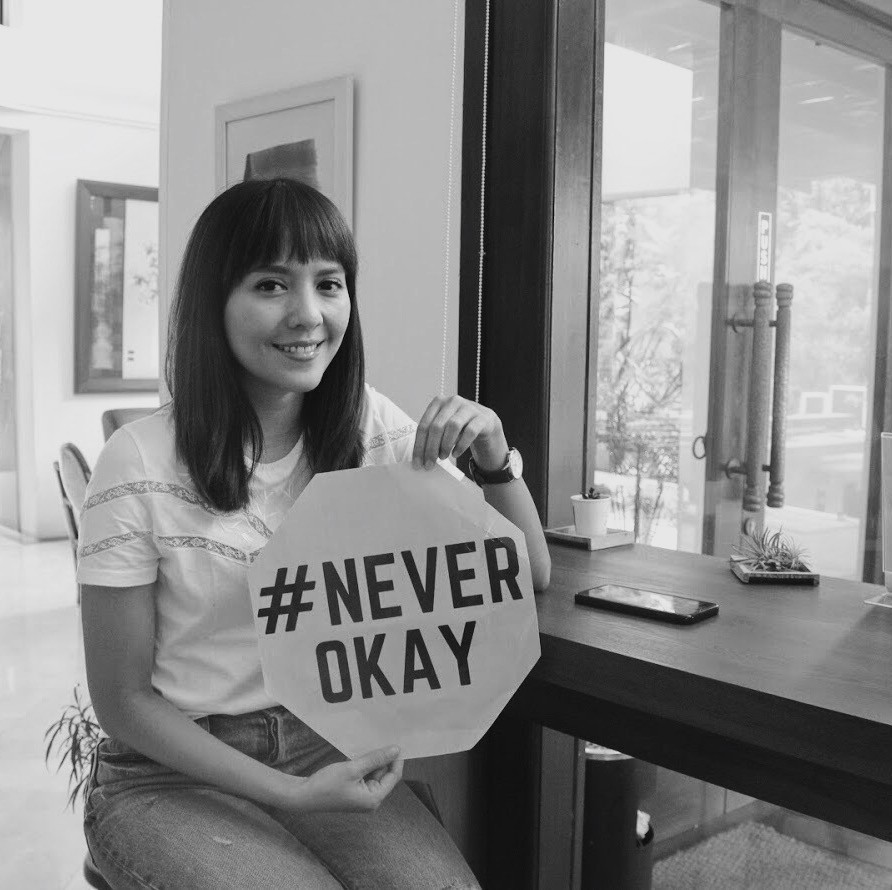
Lala then reminds that it is important for more parties to care about this issue. In fact, things that have been normalized, such as verbal harassment, can have a very negative impact on someone “It can affect somebody, can affect their work, and their self-esteem.” Therefore, a collective effort is needed where everyone takes a role. For example, as bystanders, we must strive to do something if we witness an incident of sexual harassment, employers must also be present through specific regulations, and together we must raise public awareness about this issue “We must all do this together. We can make the change in public!”
As someone in the public eye, Lala uses this to share her story with the wider community. “Sometimes when I think about this problem I feel so hopeless, but what I do is I start from myself. I put my story out there. Hopefully, what I do can inspire others.” For friends who have ever or are currently struggling against sexual harassment in the workplace, Lala advises “You’re not alone. When you realize that you’re not alone and you feel a spark in yourself to speak up, share it. You can be a part of the change when you tell your story!”
Other articles

Article
3
min read
Quid Pro Quo: When Career Opportunities Are Used as a Tool to Manipulate Sexual Consent
Have you ever encountered a story about a worker who had to offer sexual favors to get a promotion, keep their job, or gain career opportunities?
Stories like this may sound familiar. We can find them in various films and series, such as Bombshell, The Assistant, to Sleep Call. However, this situation is not merely a conflict in fictional stories. Similar practices still occur in the professional world and have a specific term: quid pro quo.
What Is Quid Pro Quo in the Context of Workplace Sexual Harassment?
Literally, quid pro quo means "this for that". In the context of workplace sexual harassment, this term refers to a situation where an employer, manager, supervisor, or coworker influences or attempts to influence a person's career decisions or working conditions in exchange for sexual acts or benefits.
Simply put, someone uses their position or influence to pressure another person into providing sexual favors under the lure of employment opportunities.

Dina, a Character in the Movie Sleep Call Who Became a Victim of Quid Pro Quo
Quid pro quo practices have three main characteristics:
Power imbalance. The perpetrator holds a higher position, seniority, or greater influence over the victim.
Career-related incentives. Promotion opportunities, employment, performance reviews, or other professional benefits are used as bargaining chips.
Accompanied by threats. Refusal may be followed by threats of lost opportunities, changes in working conditions, or other professional consequences.
Data from the 2022 Violence and Harassment in the Indonesian Workplace Survey by ILO Indonesia and the Never Okay Project shows that 50.48% of workers have experienced workplace sexual harassment and violence. In addition, 54.81% of perpetrators were supervisors, managers, or more senior colleagues. Meanwhile, 42.55% of victims chose to remain silent and did not know what to do.
These figures demonstrate that power imbalance is not an issue that can be ignored when discussing workplace safety.
Why Does Quid Pro Quo Continue to Occur?
One of the strongest factors triggering sexual harassment in the context of quid pro quo is organizational culture and systems.
There are two conditions that make this practice increasingly difficult to stop.
1. The perception that reporting will bring no change
When workers feel that reporting harassment will only be futile or even jeopardize their careers, a fear of retaliation arises.
Consequently, victims choose to stay silent because they feel they lack a safe space to seek justice.
2. The lack of consequences for perpetrators
When management fails to impose meaningful sanctions on perpetrators—especially if they hold high positions, are high performers, or are deemed financially vital to the company—the organization indirectly creates a safe haven for perpetrators.
This condition is known as institutional betrayal, where the institution that should protect its workers instead fails to provide the necessary protection.
The Impact of Quid Pro Quo on Victims' Careers
The impact of sexual harassment does not end with the experience endured by the victim. This practice can also affect their career sustainability and professional life.
Based on the 2022 Violence and Harassment in the Indonesian Workplace Survey:
47% of victims wanted to resign.
41.35% avoided meetings, schedules, or certain office areas.
22.96% experienced a decline in work performance and evaluations.
9.74% never wanted to work again.
This means that sexual harassment is not just an issue of individual behavior. This practice also impacts opportunities, productivity, and the victim's career sustainability.
How Can Organizations Prevent Quid Pro Quo?
In the fifth episode of the Not A Fiction Podcast, Wulansari, S.H., M.H., Legal Practitioner and Women's Rights Activist, recommended four essential steps for organizations and companies to prevent sexual harassment and violence:
Affirming commitment through policy. The organization's stance must be reflected in regulations, codes of conduct, and integrity pacts.
Providing clear grievance mechanisms. Reporting channels must be easily accessible and known to all workers.
Creating a safe and positive work environment. Every worker needs to have a workspace free from sexual harassment and violence.
Taking reports seriously. Organizations must respond to every report seriously while maintaining the confidentiality of the reporter.
Ultimately, creating a work ecosystem free from sexual harassment and violence is indeed no easy task. However, change is not impossible.
A safe work culture cannot be built solely through slogans, campaigns, or mere statements of support. It requires tangible policies, accessible protection mechanisms, and the organization's courage to hold perpetrators accountable regardless of their position or contribution.
Because career opportunities are not a tool to trade for sexual consent. And the workplace should be a space to thrive, not a space that forces someone to sacrifice their sense of safety just to maintain their career.
Let us start building a work system that stands with victims.
Read more

Article
3
min read
Being Competent vs Being Liked. Why are female leaders always forced to choose?
"She's too emotional."
"She's too nice to lead."
Comments like these might sound simple. However, behind them lies a double standard that still affects how we view leadership in the workplace. In various organizations, female leaders are still faced with conflicting expectations. When women are firm and assertive, they risk being labeled bossy or emotional. But when women show empathy and warmth, their competence is questioned instead.
In Enemies with Benefits, the character Wine, who is newly appointed as a Supervisor, is immediately labeled "just a pretty face" due to her friendliness at work. To gain respect from her team, Wine feels she must change her demeanor and suppress her personality to appear more "worthy" of being a leader.
Wine's experience reflects a phenomenon known as the likability-competence trap.
A bias that often forces women to choose between being respected for their competence or liked for their personality. This double standard means that a female leader's competence is judged not only by her work results, but also by the way she speaks, expresses emotions, and builds relationships.
“women who lead are disliked, and women who are liked don’t lead.”
This kind of bias rarely presents itself in the form of overt discrimination. Instead, it arises through everyday comments, feedback, performance reviews, and promotion processes that appear objective, yet are still influenced by unconscious gender stereotypes (unconscious bias).
Consequently, a woman's leadership is often judged not just by things that objectively support work success, such as the quality of decisions, work results, or the impact created. Instead, assessments are also influenced by the extent to which a female leader is considered "friendly" enough, "assertive," "pleasant," or aligned with gender expectations that still linger in the workplace.
For organizations, the impact is not only felt by individuals. Bias in evaluating leadership can limit the diversity of leadership styles, hinder creativity and human resource development, and make decision-making processes less fair.

Image: A scene of Wine crying upon hearing gossip from her coworkers about her.
Building an inclusive workplace is not just about opening up more opportunities for women or vulnerable groups to lead. What is equally important is ensuring that every process of evaluation, promotion, and feedback is conducted with fair standards. Inclusive leadership begins when competence becomes the basis of evaluation, not stereotypes about how a leader "should" behave.
Focus on competence.
Focus on work results, objective KPIs, leadership quality, and impact, rather than whether someone seems “friendly enough” or “assertive enough” in their interactions.
Distinguish leadership style from leadership ability.
Not all leaders have to show the same style to be effective. Diverse leadership styles can support the growth of creativity in the work culture and in decision-making. Support women to lead authentically.
Review the language in performance reviews.
Avoid feedback that focuses on someone's personality or expression, such as being "too emotional", "lacking warmth", or "lacking authority". Provide specific, work-behavior-based, and actionable feedback.
Be aware of bias before making decisions.
Reflect on whether evaluations, promotions, or feedback are truly based on performance, unaffected by unconscious gender stereotypes (unconscious bias).
Because in the end, competence has no gender.
An equal workplace is a place where everyone can lead authentically, without the need to suppress themselves to gain respect. Have we truly evaluated and appreciated leaders based on their competence, integrity, and the impact they create?
Read more

Article
4
min read
Creating Proactive Mechanisms for Handling Sexual Harassment: Learning from Filing for A Love
“At our office, we are safe; after all, there has never been any report received so far.”
The above statement cannot be used as a foundation to validate the absence of handling mechanisms for sexual harassment and violence in a company or institution.
For many corporate managements, the absence of reports is often used as an indicator that their work environment is completely clean and safe. However, the reality is not that simple. The absence of reports does not mean there are no cases at all. Regulatory documents must still be possessed and actively implemented, even if there has never been a report of violations.
The Danger of Not Having Clear Mechanisms
Based on data released by the Never Okay Project in 2022, many workplaces still do not have clear mechanisms to handle cases of sexual violence and harassment.
As many as 34.53% of respondents mentioned that their workplaces do not have mechanisms against sexual violence and harassment. Meanwhile, another 23.53% of respondents did not even know whether their office already has such handling mechanisms or not.
This is dangerous. Ignorance and the absence of clear mechanisms will make many victims and witnesses choose to remain silent. Because they do not know where to report and receive handling.
Learning from the Haemu Audit Team
The K-drama Filing for Love, in episode 4, tells the story of Lim Ha-Kyong (a junior engineer) who experienced sexual harassment and intimidation by James (the director). The victim felt pressured and chose not to report her situation when asked by Jo In-A (the Leader of the Haemu Audit Team).
Even though the victim claimed "nothing happened," In-A still conducted an investigation according to the applicable protocols and policies. The process was carried out without compromising the victim's position.
In-A's brave decision enabled the existing policies to be executed effectively. Evidence was successfully gathered, the perpetrator was punished, and the victim was slowly able to recover and return to work.
This story aims to show that active intervention from the company is proven to be able to save victims while maintaining organizational integrity.
Why a Proactive Mechanism is Important
Providing a responsive protection system is not just a form of care for staff, but a strategic investment for business continuity. The benefits for the company are not small
Creating psychological safety. This means employees can work peacefully without being overwhelmed by anxiety about their safety.
Increasing employee and team productivity. A healthy work environment, free from intimidation, of course, has a positive impact on work performance.
Building a healthy and sustainable work culture. This is possible due to deeply rooted values of professionalism and mutual respect within the company ecosystem.
Maintaining and enhancing business reputation. Doing business in the digital era makes companies that are committed to humanitarian issues highly attractive (employer branding) in the eyes of job applicants and investors.
Mitigating management crisis and public relations (PR) risks. Having internal handling SOPs prevents cases from escalating into public scandals, while also fostering public trust in the company's handling.
Two-Way Synergy to Create a Proactive and Effective Mechanism
A mechanism, no matter how good, cannot run effectively if its implementers are confused and intimidated.
Adapting the global guidelines from the International Labour Organization (ILO), here are the things companies can do to create proactive and effective mechanisms against sexual violence and harassment.
From the policy perspective:
Strictly defining what constitutes clear sexual harassment and violence in the workplace.
Declaring a zero-tolerance stance against all forms of sexual violence and harassment.Guaranteeing a clear, confidential, and safe reporting mechanism for reporters.
Having investigation SOPs that side with the victim's rights (a victim-centered approach).
Requiring periodic risk assessments to mitigate potential violations.
From the HR readiness perspective:
Holding mandatory training related to anti-harassment policies for all levels of employees.
Forming a special team for handling cases and providing them with specialized training (as demonstrated by Jo In-A and her Audit Team).
Providing specialized training for managers, supervisors, and team leaders to be sensitive in detecting issues.
Guaranteeing access to dedicated, easy-to-use channels for reporting.
Thorough, transparent, and justice-oriented handling of harassment cases has been proven to rebuild employees' trust in the company's credibility.
The first step to breaking the chain of workplace sexual violence begins when management dares to open its eyes, draft strict regulations, and train its HR to be proactive protective guards.
Read more